PF
DEMOCRATIC–FARMER–LABOR
Peggy Flanagan
Lieutenant governor since 2019; previously served in the Minnesota House and Minneapolis school board. 9 10
Campaign website ↗NOVEMBER 3, 2026
Candidates, positions, polling and sources for Minnesota’s 2026 U.S. Senate election.
Minnesota is electing a new U.S. senator on November 3, 2026. Democratic Lieutenant Governor Peggy Flanagan and Republican broadcaster Michele Tafoya are the major-party nominees for the seat Senator Tina Smith is leaving. Independent Marisa Simonetti and Libertarian Rebecca Whiting are also on the ballot. 3 8 13
Lieutenant governor since 2019; previously served in the Minnesota House and Minneapolis school board. 9 10
Campaign website ↗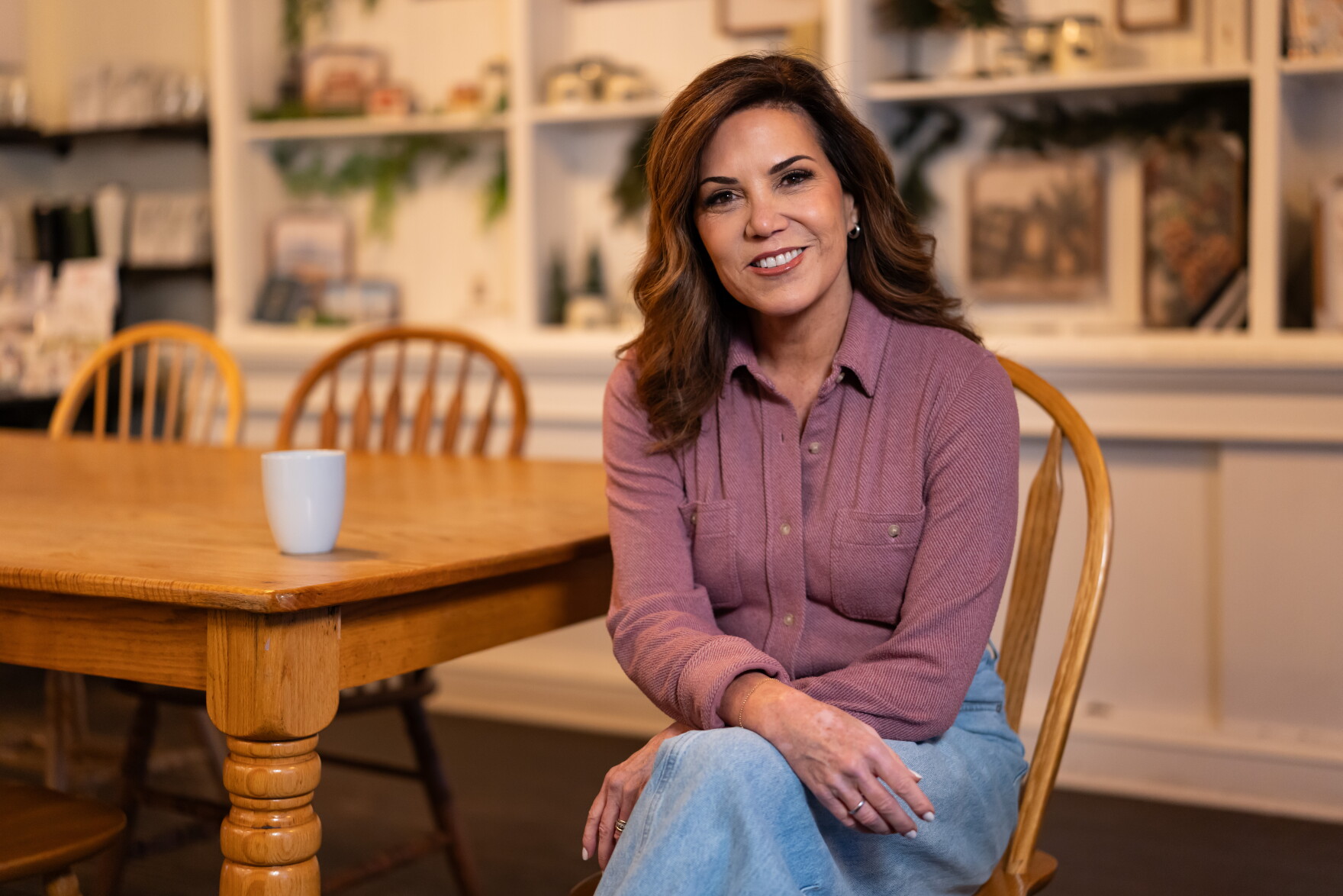
Former NBC NFL sideline reporter and four-time Sports Emmy winner; political commentator. 11 12
Campaign website ↗Flanagan favors federal protections for abortion access. Tafoya describes herself as pro-choice, supports roughly first-trimester access, opposes taxpayer funding and favors conservative judicial nominees. 4 8
Flanagan wants to dismantle and replace ICE and create a pathway to legal status. Tafoya emphasizes border enforcement and cooperation among federal, state and local authorities. 4 5 8
Flanagan favors expanded federal programs and greater taxation of high earners. Tafoya favors limiting spending, retaining tax cuts and reducing regulation. 6 7
Flanagan proposes restoring federal watchdogs and ethics restrictions; Tafoya proposes federal penalties for inadequate state oversight and stronger fraud sentencing. 6 7
Flanagan proposes lifting payroll-tax limits for higher earners. Tafoya promises to protect the program but did not specify a financing solution at the October 16 debate. 8
Each state elects two senators to six-year terms. They represent the entire state in Washington and share responsibility for making federal laws with the U.S. House. Unlike the governor, a senator does not directly run state agencies or set Minnesota's budget. 1 2
Votes on national legislation, including taxes, immigration, health care, spending and federal criminal law. Both chambers must approve ordinary legislation.
Votes on confirmation of federal judges, Supreme Court justices, Cabinet officers and many other presidential nominees.
Can investigate federal agencies, question officials in hearings and seek changes to federal funding and oversight rules.
Votes on defense funding and relevant war-powers measures; the Senate gives advice and consent to treaties and certain appointments.
Advocates for Minnesota priorities such as farm exports, federal infrastructure, veterans' services and tribal obligations.
Most legislation must pass both chambers and be signed by the president or survive a veto. Senate rules can also affect what reaches a vote.
The Senate generally requires 60 votes to end debate on most legislation, while nominations and some budget procedures are subject to different rules. No individual senator can promise to enact a law alone. 1 2
↑ Back to topPFPeggy Flanagan grew up in St. Louis Park and graduated from the University of Minnesota in 2002. She served on the Minneapolis school board (2005–2009), worked at Wellstone Action and the Children's Defense Fund–Minnesota, and served in the Minnesota House from 2015 to 2018. Elected lieutenant governor alongside Tim Walz in 2018 and 2022, she has emphasized children, housing, tribal-state relations and families in her public work. 9 10
She has been involved in the administration's priorities, including school meals, child care, housing investments and paid family leave. These are achievements of the administration and Legislature, not unilateral actions of the lieutenant governor. 9 18 4
Official biography ↗MTMichele Tafoya spent nearly three decades covering national sports, including NFL broadcasts for NBC. She worked her last Super Bowl broadcast in February 2022 after a career in which she won four Sports Emmy Awards and covered hundreds of nationally televised games. She subsequently worked as a political and cultural commentator. 11 12
Her 2026 Senate candidacy is her first run for elected office. Her campaign emphasizes government accountability, public safety, lower taxes and skepticism toward career politicians. Her professional achievements are primarily in broadcasting rather than legislative or executive government. 5 11 12
Candidate biography ↗Select an issue to compare the candidates’ positions. Sources appear with each comparison.
Would end federal tax preferences she describes as benefiting billionaires, eliminate certain AI/data-center incentives, raise the federal minimum wage to at least $17, and expand paid leave and child-care support. She argues that higher earners should contribute more to federal programs. 4 6
Opposes middle-class tax increases and supports retaining recent federal tax cuts. Would prioritize less federal spending, regulatory reductions and stronger anti-fraud enforcement. Her WCCO answers promise to protect Social Security, Medicare and defense funding but do not identify a comprehensive list of spending cuts. 5 7
Context: The Senate can propose, amend and vote on federal tax and spending legislation, but it cannot change state income-tax rates or enact a federal budget alone.
↑ IssuesSays fraud should be prosecuted and proposes restoring dismissed federal inspectors general, improving federal agency oversight, restricting stock trading by federal officials, and tightening ethics and disclosure rules. At the Oct. 16 debate, she said Gov. Walz bore primary responsibility for executive oversight while emphasizing other priorities she led. 6 4 8
Proposes federal penalties and funding consequences for states that fail to implement audit controls, longer mandatory sentences for federal fraud, better state–federal coordination, and co-sponsoring a bill to deport noncitizens convicted of fraud. She argues that Flanagan bears responsibility as lieutenant governor during state oversight failures. 5 7 8
Context: Flanagan was part of the administration overseeing affected programs; that does not itself establish that she directed fraud or committed criminal wrongdoing. Tafoya’s criticism is a campaign contention. The next senator can oversee and legislate on federal spending, but does not run Minnesota state agencies.
↑ IssuesSupports the Women’s Health Protection Act to establish federal abortion-access protections and repealing the Hyde Amendment’s federal abortion-funding restrictions. She supported Minnesota’s 2023 Protect Reproductive Options Act and favors continued federal support for reproductive-health providers. 4 8
Describes herself as a “pro-choice Republican” and supports access to abortion in roughly the first 12 weeks of pregnancy; she opposes public funding for abortion and says she would confirm conservative, strict-constructionist judges. At the October 16 debate, she did not spell out what “reasonable access” would require and said she did not seek to change Minnesota’s law from the Senate. 8
Context: Senators vote on federal abortion legislation and confirmation of federal judges. A U.S. senator cannot directly repeal Minnesota’s abortion statute. Tafoya’s position should not be described simply as support for an abortion ban.
↑ IssuesAdvocates dismantling and replacing ICE with a different enforcement structure, along with secure borders, due process, increased immigration-judge capacity and a pathway to legal status for long-settled undocumented residents. She criticizes Operation Metro Surge and federal enforcement tactics in Minnesota. 4 6 8
Calls for stronger border security, cooperation between federal and local enforcement, deporting noncitizens convicted of crimes and guest-worker / high-skilled legal pathways. She criticized the management of Operation Metro Surge during the debate but also faulted state leaders for the unrest surrounding it. 5 7 8
Context: Immigration statutes, federal enforcement appropriations and oversight are squarely within congressional authority; operational decisions still belong to the executive branch.
↑ IssuesSupports Medicare for All as a long-term goal, restoring Affordable Care Act premium credits and Medicaid funding, expanded vision/dental/hearing benefits, and broader Medicare prescription-drug price negotiations. Proposes restricting insurers’ prior-authorization denials. 4 6
Calls for maintaining core Medicare and Medicaid programs, keeping or expanding patient choice, reducing prescription-drug and hospital charges, and reining in insurer prior authorizations. Opposes a government-run single-payer transition and has highlighted a federal rural-health investment fund. 5 7
Context: The candidates share concerns about health care costs and insurance practices, but their proposals for financing and administering care differ.
↑ IssuesSupports expanded Head Start and universal pre-K, more federal funding for special education, increased federal K–12 support rather than voucher programs, and more student-loan relief for certain public-service workers. Points to state universal school meals and paid family leave as priorities during her tenure. 4 9 19
Calls for more parental authority over schooling, school-accountability measures, stronger academic performance, and federal policies restricting transgender participation in girls’ and women’s school sports and locker rooms. Her published education platform gives fewer specific funding figures. 5
Context: A federal senator can shape education grants and civil-rights laws. Local curriculum, school operations and many education rules are not set directly by a senator.
↑ IssuesSupports increased resources and training for police, reentry and violence-prevention programs, and federal bans on assault-style firearms, high-capacity magazines and ghost guns. 4
Calls for tougher penalties for violent crime, increased support, training and equipment for law enforcement, and broader federal–state cooperation. Her published campaign issues do not specify an equivalent detailed federal firearms bill. 5
Context: A lack of a detailed campaign proposal on a topic does not establish opposition to every possible reform; this summary describes the positions located in published materials.
↑ IssuesContext: Congress controls Social Security taxes and statutory benefits; neither candidate could change the program alone.
↑ IssuesContext: Congress writes federal trade law and can constrain delegated tariff authorities. Presidential implementation and international negotiations also matter.
↑ IssuesAdvocates wind, solar, clean-energy investment, biofuels, grid and infrastructure support, and environmental safeguards, tying such investment to union jobs and emissions reductions. Supports federal housing construction and infrastructure spending. 4
Advocates an “all-of-the-above” energy strategy, including reliable domestic energy supplies, and fewer regulations that she argues increase energy costs. She emphasizes cutting household electricity and fuel costs. 5
Context: Neither campaign’s cited materials provide a comprehensive Minnesota-specific AI/data-center grid-cost plan for the Senate office. We avoid inferring one.
↑ IssuesOpposed the 2026 Iran war and told the Oct. 16 debate she would vote to end it. Supports aid for Ukraine, NATO partnerships, a Gaza ceasefire and two-state solution, and restrictions on offensive weapons sales to Israel under Prime Minister Netanyahu. 4 8
Initially supported U.S. intervention in Iran, but said at the debate the conflict had gone on too long and should end strategically. Expressed strong support for Israel and rejected characterizing its Gaza campaign as genocide. Her published campaign material offers fewer details on Ukraine and NATO. 8
Context: A senator cannot independently direct military action, but can vote on authorizations, appropriations, resolutions and treaties; the president is commander in chief.
↑ IssuesContext: Federal voting standards would require new legislation and, in some cases, judicial review. Senate confirmation votes concern federal judges and executive appointments, not Minnesota state judges.
↑ IssuesTwo recent, independently commissioned media polls of Minnesota likely voters reported the following. These are individual survey results—not a prediction or an election outcome. 14 15
Smith's retirement created an open Senate contest. After the primaries, Flanagan and Tafoya became the major-party nominees. 6 7 12
Tafoya cites fraud in Minnesota-administered programs as a reason to challenge the Walz–Flanagan administration. Flanagan acknowledges the need for stronger fraud prevention and points to federal watchdog and ethics reforms. The scope of individual responsibility is disputed; no criminal wrongdoing by Flanagan is established by the reporting cited here. 6 7 8
President Donald Trump endorsed Tafoya shortly before the debate. She has emphasized her willingness to disagree with her party; Flanagan questions that independence. These are opposing campaign arguments, not findings about future Senate votes. 8 20
At an MPR News debate, the candidates addressed abortion, immigration enforcement, tariffs, Social Security and the Iran war. Tafoya said the war should end strategically after earlier supporting intervention; Flanagan said she opposed it from the start. Read or watch the debate ↗ 8 21
The Senate contest appears statewide. Other races depend on your address. Use the Minnesota Secretary of State’s official sample ballot, registration tools and polling-place information; Northline does not need your home address.
Election Day: Tuesday, November 3, 2026. This static preview does not collect names, addresses, voting history or personal data. 3 22 23
↑ Back to topNumbered citations link to the sources listed below. Campaign proposals are attributed to the candidates.
Preview images reference the Minnesota Governor's press kit and a KAXE campaign portrait. Remote portraits may not display offline; the page falls back to initials. Confirm licensing and permissions before publication. 25 26
AI tools assisted in researching and drafting this guide. The editor and an AI model reviewed sources and made efforts to verify the information, but factual errors or omissions may remain. This guide is not exhaustive. The selection of topics, summaries, and presentation reflect editorial judgment; no candidate endorsement is implied. Positions and polling may change. Readers are encouraged to consult the original sources linked throughout.